Author name: titanstar

Education-World

IELTS English Test Fee Waiver 2026: Complete Guide for Indian Students

The IELTS English Test is a crucial requirement for Indian students planning to study, work, or migrate abroad. However, with the IELTS exam fee in India crossing ₹17,000, many students search for ways to reduce or waive this cost. This has led to widespread confusion, misinformation, and even fraud related to so-called “IELTS fee waivers.” This 2026 complete guide explains the reality of IELTS fee waivers, legitimate alternatives, reimbursement options, scholarships, and safe ways Indian students can manage IELTS-related expenses—without falling for scams. Is There an Official IELTS Fee Waiver in 2026? The Short Answer: ❌ No Universal Fee Waiver As of 2026, IELTS does not offer a universal or direct fee waiver for Indian students. The test fee is standardized and must be paid at the time of booking. Any website, agent, or individual claiming to provide a “guaranteed IELTS fee waiver” should be treated with caution. However, this does not mean students have no financial relief options. Understanding the IELTS Test Fee in India (2026) Before exploring alternatives, it’s important to understand the cost structure. IELTS Academic / General Training (India):₹17,000–₹18,000 (approx.) Fee includes: Test administration Scoring and evaluation Digital Test Report Forms (TRFs) Fee is non-refundable after the test date (with limited exceptions) This fee is set by official IELTS partners and is the same across India. Legitimate Ways Indian Students Can Reduce IELTS Costs Although IELTS itself does not waive fees directly, several legitimate pathways can help students reduce or recover the cost. 1. IELTS Fee Reimbursement by Universities Many international universities offer IELTS fee reimbursement after enrollment. How It Works: Student pays IELTS fee upfront Receives an offer letter After joining the university, IELTS fee is reimbursed or adjusted against tuition Common in: Canada Australia UK Ireland Important Notes: Reimbursement is not automatic Proof of IELTS payment is required Applies only after successful enrollment This is one of the most reliable fee recovery methods. 2. IELTS Fee Support Through Scholarships Some international and Indian scholarships indirectly cover IELTS expenses. Examples: University-specific merit scholarships Government-funded international education schemes NGO-backed education grants These scholarships may: Reimburse IELTS fees Cover overall application expenses Offset costs through tuition discounts Always read scholarship terms carefully—IELTS coverage is often indirect. 3. Coaching Institute Promotions (Partial Support) Some coaching institutes offer: IELTS exam fee cashback Discount vouchers Test fee reimbursement upon course completion ⚠️ Important Warning:This does not mean IELTS itself is free. These are private promotions and may include conditions such as: Mandatory enrollment in paid courses Minimum score requirements Limited-time offers Always request written confirmation. 4. University IELTS Waiver (Test Requirement Waiver) This is often confused with a fee waiver, but it is different. Some universities waive the IELTS requirement, not the fee. IELTS Requirement Waiver Applies If: Medium of instruction was English Prior education completed in an English-speaking country High English scores in school or university This means you don’t need to take IELTS at all, saving the entire fee. However: Visa authorities may still require IELTS Not accepted by all universities Always verify with both the university and visa requirements. 5. Government and NGO Education Support Programs In rare cases, some government or NGO-backed education programs include: Application fee coverage Test cost reimbursements These are usually: Need-based Region-specific Highly competitive They require documentation such as income certificates and academic records. Common Myths About IELTS Fee Waivers ❌ Myth 1: IELTS Offers Free Exams for Students Reality: IELTS does not conduct free exams for the public. ❌ Myth 2: Agents Can Get You a Fee Waiver Reality: No agent has authority to waive IELTS fees. ❌ Myth 3: IELTS Fee Waivers Are Guaranteed Reality: All legitimate options are conditional and indirect. How to Identify Fake IELTS Fee Waiver Scams Be cautious if someone: Promises “100% free IELTS” Asks for upfront processing fees Guarantees fee waivers without conditions Claims “special access” to IELTS officials IELTS registrations can only be done through official portals. If in doubt, verify directly with: British Council IDP IELTS Authorized IELTS partners Can Retake or Reschedule Fees Be Waived? ❌ No. Retake and rescheduling fees are not waived. However: Some universities accept One Skill Retake, reducing full retest cost Some coaching platforms offer discounts for repeat test-takers These are cost-reduction options—not waivers. IELTS One Skill Retake (Cost-Saving Option) Introduced in recent years, One Skill Retake allows candidates to retake only one module (Listening, Reading, Writing, or Speaking). Benefits: Lower cost than full test Faster improvement Accepted by many universities This can save money compared to reappearing for the entire test. Smart Financial Planning Tips for IELTS Aspirants To manage IELTS costs effectively: Prepare well to avoid retakes Take official mock tests Choose the right test type (Academic vs General) Avoid rushed bookings Verify acceptance requirements before testing Good preparation is the best cost-saving strategy. Final Verdict: IELTS Fee Waiver Reality in 2026 There is no direct IELTS fee waiver for Indian students in 2026. However, legitimate alternatives exist, including: University reimbursements Scholarships Requirement waivers Cost-saving retake options The key is awareness and verification. Students who understand the system can avoid scams, plan smarter, and reduce financial stress—while still achieving their study abroad goals.

Education-World

IELTS English Test Rules 2026: Complete Guide for Indian Students

The IELTS English Test is one of the most important exams for Indian students planning to study, work, or migrate abroad in 2026. While most candidates focus heavily on preparation for Listening, Reading, Writing, and Speaking, many overlook a critical factor—IELTS exam rules. Failing to follow IELTS rules can lead to score cancellation, test disqualification, or even a long-term ban. This detailed guide explains all IELTS rules for 2026, including registration requirements, exam-day rules, prohibited items, biometric verification, speaking test rules, and consequences of misconduct. Understanding these rules in advance helps ensure a smooth, stress-free test experience. Why IELTS Rules Matter in 2026 IELTS follows strict global standards set by its governing bodies. In recent years, test security has been tightened to prevent malpractice, impersonation, and unfair advantages. For Indian students, even a small mistake—such as carrying the wrong ID or arriving late—can result in denied entry or test cancellation. Knowing the rules is just as important as knowing the syllabus. IELTS Eligibility Rules (2026) IELTS does not have strict age or academic eligibility requirements, but general guidelines apply: Recommended minimum age: 16 years No maximum age limit No minimum qualification required However, candidates must ensure they meet university or visa-specific requirements, which may include minimum band scores or module-wise cut-offs. IELTS Registration Rules for Indian Students 1. Valid Identification Requirement A valid original passport is mandatory for IELTS registration and exam day The passport must be current (not expired) The passport number entered during registration must match the passport carried on exam day ❌ Aadhaar card, PAN card, driving license, or digital copies are not accepted 2. Name Matching Rules Your name on the IELTS registration must exactly match your passport Even minor spelling differences can cause problems on exam day If you make a mistake, request a correction before the test date. IELTS Exam Day Rules (2026) Arrival Time Rules Candidates should arrive at least 30 minutes early Late arrival may result in no entry, with no refund Time discipline is strictly enforced across all test centers. Biometric Verification IELTS uses biometric verification to ensure test security. This includes: Photograph capture Fingerprint scanning (where applicable) Biometric checks may be conducted: During registration Before entering the test room During breaks Refusing biometric verification leads to immediate disqualification. Items Allowed and Prohibited in IELTS Exam Hall Allowed Items Original passport Transparent water bottle (label removed) Stationery provided by the test center Prohibited Items Mobile phones Smartwatches or digital watches Bags and wallets Notes, papers, or books Earphones Food (unless medically required with approval) All personal belongings must be stored in designated areas outside the test room. Rules for IELTS Listening Test No extra time except 10 minutes (paper-based) for answer transfer Listening audio is played only once Talking, hand signals, or asking questions during audio playback is prohibited Spelling and grammar matter—incorrect spelling results in lost marks. Rules for IELTS Reading Test No extra time for transferring answers Use only the answer sheet for final responses Do not write on the question paper for final scoring Switching between sections is allowed, but time must be managed carefully. Rules for IELTS Writing Test Follow word count instructions strictly: Task 1: Minimum 150 words Task 2: Minimum 250 words Writing below the word limit leads to penalties Writing irrelevant or memorized content lowers scores Handwriting must be clear and readable. IELTS Speaking Test Rules (2026) Speaking Test Format Conducted face-to-face with a certified examiner Duration: 11–14 minutes May be held on the same day or within 7 days of the main test Speaking Test Rules No memorized answers No electronic devices allowed Speak naturally and clearly Examiners assess fluency, pronunciation, grammar, and vocabulary, not accent. Break Rules During the Test Breaks are allowed only with permission Candidates may be escorted during breaks Communication with others is strictly prohibited Any suspicious behavior during breaks can lead to investigation. Misconduct and Malpractice Rules IELTS takes misconduct very seriously. Examples of malpractice: Cheating or copying answers Impersonation Using unauthorized materials Sharing exam content Attempting to influence examiners Consequences: Immediate test cancellation Withholding of results Ban from IELTS for up to 5 years Reporting to universities and immigration authorities Special Arrangements and Medical Rules Candidates with disabilities or medical conditions may request: Extra time Special seating Breaks Medical aids Requests must be submitted at least 6 weeks in advance, with valid medical documentation. IELTS Result Rules and Validity Results are released: Computer-based: 3–5 days Paper-based: 13 days Results are valid for 2 years Test Report Forms (TRFs) are issued digitally Score revaluation (Enquiry on Results) is available for a fee. Important IELTS Rule Updates for 2026 Increased focus on biometric security Stricter ID verification Enhanced monitoring during computer-based tests AI-assisted test integrity checks These measures aim to ensure fairness for all candidates. Final Checklist for Indian Students Before test day, ensure: Passport is valid and carried Name matches registration details You know your test venue and time You understand all exam-day rules You avoid prohibited items Final Thoughts Understanding IELTS English Test Rules 2026 is essential for every Indian student aiming for international opportunities. Rules exist to protect your effort, your score, and your future. Preparation is not complete without knowing what to do—and what not to do—on exam day. Follow the rules, stay calm, and focus on performing your best.

Education-World

Beyond Borders: How Indian Students Are Redefining Global Education in 2025–26

For decades, global education followed a familiar pattern for Indian students: a limited set of countries, conventional degree choices, and a linear path from admission to migration. That narrative is rapidly changing. In 2025–26, Indian students are no longer just participants in global education—they are active architects reshaping how, where, and why international education happens. From choosing unconventional destinations to prioritizing skills over status, Indian students are driving a fundamental shift in the global education ecosystem. This transformation reflects deeper changes in mindset, technology, economics, and global opportunity. A New Era of Global Aspiration India remains one of the world’s largest contributors to international student mobility. According to global education estimates, over 1.3 million Indian students are currently studying abroad, a number expected to grow steadily through 2026 despite rising costs and stricter visa policies. What has changed is not the ambition—but the definition of success. Today’s Indian students are asking sharper questions: What skills will this degree give me? Is the return on investment worth it? Will this education make me globally employable—not just internationally mobile? This shift is redefining global education from a destination-driven journey to a purpose-driven strategy. Beyond the “Big Four”: Diversification of Destinations For years, the US, UK, Canada, and Australia dominated Indian students’ choices. While these countries remain popular, 2025–26 marks a clear diversification trend. Indian students are increasingly choosing: Germany for tuition-free or low-cost public education Ireland for strong post-study work opportunities Netherlands for English-taught STEM programs France and Italy for business, fashion, and design Singapore and the UAE for regional career hubs This diversification is driven by: Rising tuition and living costs in traditional destinations Tighter visa regulations Greater awareness of alternative high-quality education systems Indian students are proving that global education does not require following a single, crowded path. Skills Over Status: The Rise of Outcome-Based Education One of the most defining trends of 2025–26 is the shift from brand-name universities to outcome-driven programs. Indian students are increasingly prioritizing: STEM, AI, data science, cybersecurity, and business analytics Industry-integrated curricula Internships, co-op programs, and applied learning Employability metrics over university rankings Degrees are no longer seen as certificates of prestige—but as launchpads for global careers. This is particularly evident in: Master’s programs with strong industry partnerships Shorter, skill-intensive courses Specialized diplomas and professional certifications alongside degrees Global universities are adapting quickly—redesigning curricula, strengthening employer ties, and actively recruiting Indian students who bring both academic strength and professional ambition. Technology as the Great Enabler Technology has radically democratized access to global education. In 2025–26, Indian students prepare for international journeys using: Online IELTS, TOEFL, and PTE coaching AI-powered mock tests and feedback tools Virtual university fairs and counseling sessions Remote application and documentation processes English proficiency tests themselves have evolved, with computer-based testing, faster results, and flexible scheduling, making global education accessible even beyond metro cities. This digital shift has: Reduced dependency on traditional agents Increased transparency Empowered students to make informed, independent decisions Indian students today are among the most digitally self-reliant global applicants in the world. Financial Consciousness and ROI Thinking Perhaps the most striking evolution is financial maturity. Unlike earlier generations, today’s students and families are ROI-focused. They evaluate: Tuition vs post-study earning potential Scholarship availability Cost of living Work rights during and after study Countries offering post-study work visas, PR pathways, and job market access are gaining preference over those offering prestige alone. This shift has also increased demand for: Merit-based scholarships Flexible payment structures Shorter-duration master’s programs Indian students are treating education as a strategic investment, not an emotional decision. Hybrid Pathways and Flexible Learning Models The idea that global education must be fully on-campus from day one is fading. In 2025–26, students are embracing: Hybrid programs (part online, part on-campus) Pathway programs and credit transfers Online-first learning followed by overseas exposure These models reduce cost, increase flexibility, and allow students to adapt to changing global conditions—economic, political, or personal. Universities are responding by designing modular, stackable learning experiences, and Indian students are among the fastest adopters. Indian Students as Global Contributors, Not Just Consumers Indian students are no longer viewed merely as international fee-payers. They are increasingly recognized as: Innovation contributors Startup founders Researchers Cultural ambassadors With strong English proficiency, technical expertise, and adaptability, Indian students are shaping classrooms, labs, and workplaces worldwide. In many countries, Indian graduates are filling critical skill gaps, particularly in technology, healthcare, and engineering. This has repositioned Indian students as strategic global talent, not just international applicants. The Changing Role of English Proficiency English proficiency tests remain a gateway—but their role has evolved. In 2025–26: Students aim for functional fluency, not just scores Speaking and communication skills matter more than ever Universities value real-world English usage IELTS, TOEFL, and PTE preparation is now seen as career readiness, not exam preparation. Indian students increasingly view English as a global workplace skill—one that enables leadership, collaboration, and influence. Redefining Success Beyond Migration Perhaps the most profound shift is philosophical. Global education is no longer synonymous with permanent migration. Many Indian students now aim to: Work internationally for a few years Build global networks Return to India with global experience Launch startups or leadership careers This “global exposure, local impact” mindset is redefining what success looks like. The world is no longer a one-way destination—it’s a two-way exchange of knowledge, skills, and opportunity. What This Means for the Future of Global Education As Indian students continue to redefine global education, institutions worldwide must adapt. The future belongs to universities and platforms that: Focus on employability Offer transparency and flexibility Understand Indian student aspirations deeply Support long-term career outcomes, not just admissions Indian students are setting new global standards—for preparedness, ambition, and adaptability. Conclusion: Beyond Borders, Beyond Limits In 2025–26, Indian students are not simply crossing borders—they are expanding them. They are redefining where education happens, how it is valued, and what it leads to. With clarity, confidence, and global vision, Indian students are shaping a future where education is not about geography—but about possibility.

Education-World

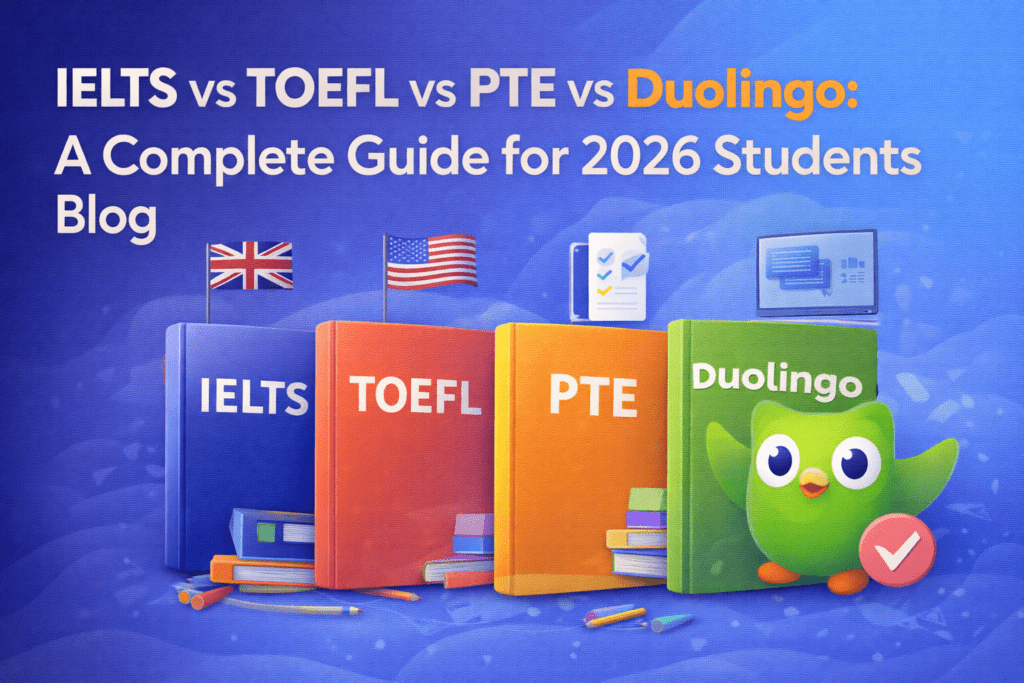
IELTS vs TOEFL vs PTE vs Duolingo: A Complete Guide for 2026 Students

Choosing the right English proficiency test is one of the most important decisions for students planning to study, work, or migrate abroad in 2026. Universities and immigration authorities require proof of English language ability, but with multiple tests available—IELTS, TOEFL, PTE, and Duolingo English Test—many students feel confused. Each exam has its own format, scoring system, acceptance level, and difficulty. This comprehensive guide compares IELTS vs TOEFL vs PTE vs Duolingo in detail, helping you choose the best test based on your goals, strengths, and study destination. Why English Proficiency Tests Matter in 2026 English proficiency tests are not just entry requirements—they also indicate your readiness to succeed in an international academic or professional environment. In 2026, universities are paying closer attention to communication skills, not just scores. Choosing the right exam can: Increase university acceptance chances Reduce visa rejection risks Save time and money Improve overall confidence Overview of IELTS, TOEFL, PTE, and Duolingo Before diving into comparisons, let’s understand each test briefly. IELTS (International English Language Testing System) IELTS is one of the most widely accepted English tests worldwide. It is accepted in over 140 countries and by 11,000+ institutions. IELTS offers two versions: Academic IELTS – for study abroad General Training IELTS – for migration and work The speaking test is conducted face-to-face with an examiner, which many students find more natural. TOEFL (Test of English as a Foreign Language) TOEFL is primarily preferred by US and Canadian universities. It focuses heavily on academic English and is entirely computer-based. TOEFL tests integrated skills such as listening while reading and speaking based on academic content. PTE (Pearson Test of English) PTE is a fully computer-based test scored entirely by AI. It is known for: Fast results (24–48 hours) No human bias Flexible test dates PTE is growing rapidly in popularity, especially among students targeting Australia, Canada, and the UK. Duolingo English Test Duolingo is the newest and most affordable option. It is taken online from home and completed in about 1 hour. While acceptance is increasing, Duolingo is still not accepted by all universities or visa authorities. IELTS vs TOEFL vs PTE vs Duolingo: Key Differences 1. Test Format Comparison IELTS Paper-based or computer-based Face-to-face speaking test Traditional exam environment TOEFL Fully computer-based No human interaction Academic-focused questions PTE Fully computer-based AI-scored speaking Fast-paced exam style Duolingo Online, at-home test Short duration Adaptive questions Students who prefer human interaction usually choose IELTS, while tech-friendly students may prefer PTE or TOEFL. 2. Speaking Test Experience Speaking is often the most feared section. IELTS: Real examiner, conversational format TOEFL: Speak into a microphone PTE: Speak to a computer with strict timing Duolingo: Short recorded responses Many Indian students feel more comfortable expressing ideas naturally in IELTS speaking. 3. Scoring System Explained Test Score Range IELTS 0–9 Band TOEFL 0–120 PTE 10–90 Duolingo 10–160 IELTS band scores are easier to understand for universities and visa officers, making them highly reliable in 2026. 4. Difficulty Level (Student Perspective) Difficulty depends on individual strengths. IELTS: Balanced, real-life English TOEFL: Academically demanding PTE: Fast-paced, technology-heavy Duolingo: Easier but unpredictable Students with strong grammar and reading skills may prefer TOEFL, while fluent speakers often do well in IELTS. Acceptance Worldwide in 2026 IELTS Acceptance UK, Canada, Australia, New Zealand Europe and Asia Widely accepted for student visas and PR TOEFL Acceptance Strong acceptance in the USA Accepted worldwide but less preferred for PR PTE Acceptance Growing acceptance in Australia and Canada Accepted by many universities Duolingo Acceptance Limited visa acceptance Accepted by selected universities only For maximum safety, IELTS remains the most accepted option globally. Cost Comparison (Approximate – India) IELTS: ₹17,000–18,000 TOEFL: ₹16,000–17,000 PTE: ₹15,000–16,000 Duolingo: ₹4,000–5,000 Duolingo is the cheapest but not the safest choice for all destinations. Result Time & Validity IELTS: Results in 3–5 days (computer-based) TOEFL: 6–10 days PTE: 24–48 hours Duolingo: 48 hours All tests are valid for 2 years. Which Test Should You Choose in 2026? Choose IELTS if: You want maximum global acceptance You prefer face-to-face speaking You plan for PR or study abroad Choose TOEFL if: You aim for US universities You prefer academic English You are comfortable with long listening sections Choose PTE if: You want quick results You are comfortable with computer-based exams You prefer AI evaluation Choose Duolingo if: You want a low-cost option Your university accepts it You need quick results from home Final Verdict: Best English Test for 2026 There is no single “best” test for everyone. The right choice depends on: Your destination country University requirements Comfort with technology Budget and time However, in 2026, IELTS remains the safest and most widely accepted English proficiency test for Indian students aiming for global opportunities.

Education-World

Top 10 IELTS Tips Every Beginner Must Know (2026 Guide)

Preparing for the IELTS exam can feel overwhelming, especially if you are a beginner. With multiple sections, strict timing, and high expectations from universities and immigration authorities, many Indian students feel unsure about where to start. However, with the right strategy, IELTS preparation becomes manageable and even enjoyable. This 2026 IELTS beginner guide covers the top 10 essential tips every first-time test-taker must know to achieve a strong band score. Whether you aim to study abroad, migrate, or work overseas, these tips will help you build a solid foundation. 1. Understand the IELTS Exam Format Completely Before opening any book or joining a coaching class, your first step should be understanding the IELTS exam structure. IELTS consists of four sections: Listening (30 minutes) Reading (60 minutes) Writing (60 minutes) Speaking (11–14 minutes) Each section tests different language skills, and each is scored separately. Many beginners make the mistake of jumping into practice without understanding the format, which leads to confusion and poor performance. In 2026, IELTS continues to focus heavily on real-life English usage, not memorized answers. Knowing the number of questions, task types, and scoring patterns helps you prepare with clarity and confidence. 2. Choose the Correct IELTS Test Type One of the most common beginner mistakes is choosing the wrong IELTS test type. There are two types: IELTS Academic – for studying abroad IELTS General Training – for migration or work purposes Indian students planning for universities, colleges, or professional registration must choose Academic IELTS. If your goal is PR or employment abroad, General Training is usually required. Always confirm the required test type with your university, embassy, or employer before booking the exam. Choosing the wrong version can cost time, money, and opportunities. 3. Learn How IELTS Band Scores Work Understanding how IELTS band scores are calculated is crucial for beginners. IELTS uses a 9-band scoring system, and each module is scored individually. Your final band score is the average of all four sections. For example: Listening: 7.5 Reading: 7.0 Writing: 6.5 Speaking: 7.0Final Band: 7.0 Each section has specific assessment criteria: Writing and Speaking are evaluated on task achievement, coherence, grammar, and vocabulary Listening and Reading depend on correct answers Knowing these criteria helps you focus on what examiners actually look for instead of guessing. 4. Practice with Official IELTS Materials Only Many beginners waste time using random online materials that do not match the real exam level. For accurate preparation, always practice with official IELTS resources. These include: Cambridge IELTS books Official IELTS practice tests Trusted IELTS platforms and mock tests Practicing real test-style questions helps you understand difficulty levels, improves accuracy, and builds exam confidence. In 2026, quality matters more than quantity—fewer, high-quality tests are better than many unreliable ones. 5. Improve English Daily, Not Just for IELTS IELTS is not about tricks—it tests your overall English ability. Beginners often focus only on exam questions but ignore daily language improvement. You should: Read English newspapers or blogs Watch English movies or YouTube videos Listen to podcasts or news Write short paragraphs daily This habit improves grammar, vocabulary, pronunciation, and comprehension naturally. Even 30–45 minutes of daily English exposure can significantly boost your IELTS score over time. 6. Master Time Management from Day One Time pressure is one of the biggest challenges in IELTS, especially for beginners. Many students know the answers but fail to complete the paper. Each section has strict time limits, and there is no extra time except for Listening answer transfer. To improve time management: Practice with a timer Learn when to skip difficult questions Avoid spending too much time on one answer Good time management can improve your band score even without improving your English level. 7. Build Vocabulary the Smart Way Vocabulary plays a vital role in all four IELTS sections. However, memorizing long word lists rarely helps beginners. Instead: Learn words in context Note how words are used in sentences Focus on synonyms and collocations Practice paraphrasing sentences For Writing and Speaking, quality matters more than complexity. Using correct, natural vocabulary scores better than forcing difficult words incorrectly. 8. Practice Speaking Regularly to Build Confidence IELTS Speaking is a face-to-face interview, and many Indian beginners feel nervous about it. Confidence matters as much as accuracy. To improve: Speak English daily, even if alone Record your answers and listen Practice common topics like education, hobbies, work, and travel Focus on clarity, not speed In 2026, examiners value clear communication over accent. You do not need a foreign accent—just speak naturally and confidently. 9. Avoid Common Beginner Mistakes Many beginners lose marks due to small but avoidable mistakes, such as: Ignoring word limits in Writing Spelling errors in Listening Not reading instructions carefully Giving memorized answers in Speaking IELTS examiners can easily identify memorized responses, which lowers your score. Always answer naturally and follow instructions carefully. 10. Take Full-Length Mock Tests Before the Exam Mock tests are essential for measuring readiness. Beginners often avoid mocks due to fear, but mocks actually reduce exam stress. Benefits of mock tests: Improve stamina Identify weak areas Build exam confidence Improve time management Take at least 3–5 full-length mock tests before your exam. Analyze your mistakes and work on them instead of repeating tests blindly. Final Thoughts IELTS success does not depend on talent—it depends on strategy, consistency, and smart practice. As a beginner, focusing on the right steps from the start can save months of confusion and stress. By following these Top 10 IELTS tips for beginners in 2026, Indian students can build a strong foundation and confidently aim for 7+ band scores. If you prepare correctly, IELTS becomes not a hurdle—but a gateway to global opportunities.

Education-World

IELTS Band 7+ Strategies: The Complete Guide to Scoring High in 2026

IELTS Band 7+ Strategies | Proven Tips to Score Higher in 2026 Learn the most effective IELTS Band 7+ strategies for Writing, Speaking, Reading & Listening. Expert tips, templates, and step-by-step methods for scoring 7, 7.5 and above. Achieving Band 7+ in IELTS is not about being perfect in English — it’s about using the right exam strategies.Most students remain stuck at 6–6.5 because they prepare without a plan, without structure, and without understanding what examiners actually want. This guide gives you the exact Band 7+ strategies used by top scorers and Titan Scholar students.Follow them consistently → and Band 7+ is achievable. Introduction BAND 7+ WRITING STRATEGIES Understand What Examiners Want To score Band 7+, you must meet four marking criteria: Task Response Coherence & Cohesion Lexical Resource (Vocabulary) Grammatical Range & Accuracy Band 7 = clear position, organized ideas, less common vocabulary, mostly error-free grammar. This guide gives you the exact Band 7+ strategies used by top scorers and Titan Scholar students.Follow them consistently → and Band 7+ is achievable. BAND 7+ SPEAKING STRATEGIES Focus on Fluency, Not Accent Examiners do NOT care about: ❌ British accent❌ American accent❌ “Fancy” words They only want: ✔ Natural flow✔ Very few pauses✔ Clear ideas✔ Connected speech BAND 7+ READING STRATEGIES Reading is Not About English — It’s About Technique Students who score 7+ follow 3 skills: 1. Skimming → Read fast for main idea 2. Scanning → Locate specific info 3. Keyword Matching → Compare with question Follow This 60-Minute Strategy 0–5 minutes: Skim all passages5–30 minutes: Solve Passage 1 & 230–55 minutes: Solve Passage 355–60 minutes: Check answers This ensures you don’t get stuck. BAND 7+ LISTENING STRATEGIES Predict the Answer Before Hearing It Before audio starts, look at blanks and guess: Word type (noun/verb) Number Money Time Name / place This makes listening easier. BAND 7+ VOCABULARY STRATEGIES Learn Vocabulary by Context, Not Lists Instead of memorising 1000 words… Learn: 10 words/day Meaning Example sentence Synonym/Antonym Use in Writing/Speaking Example: Word: “Significant”Sentence: “There was a significant improvement in scores.” BAND 7+ EXAM-DAY STRATEGIES ✔ Sleep well ✔ Eat light ✔ Do a quick warm-up before Speaking ✔ Keep watch on time during Writing & Reading ✔ Don’t panic if you miss one Listening answer—move on ✔ Maintain a confident tone Your exam behavior influences your score more than you think. Final Summary: The Band 7+ Formula To score Band 7+, focus on: ✔ Writing → Structure + clarity ✔ Speaking → Fluency + natural delivery ✔ Reading → Technique + speed ✔ Listening → Prediction + concentration ✔ Vocabulary → Context + collocations ✔ Mindset → Practice + consistency These strategies have helped thousands of Titan Scholar students jump from 5.5 → 7, 6 → 7.5, and even 7 → 8.

Education-World

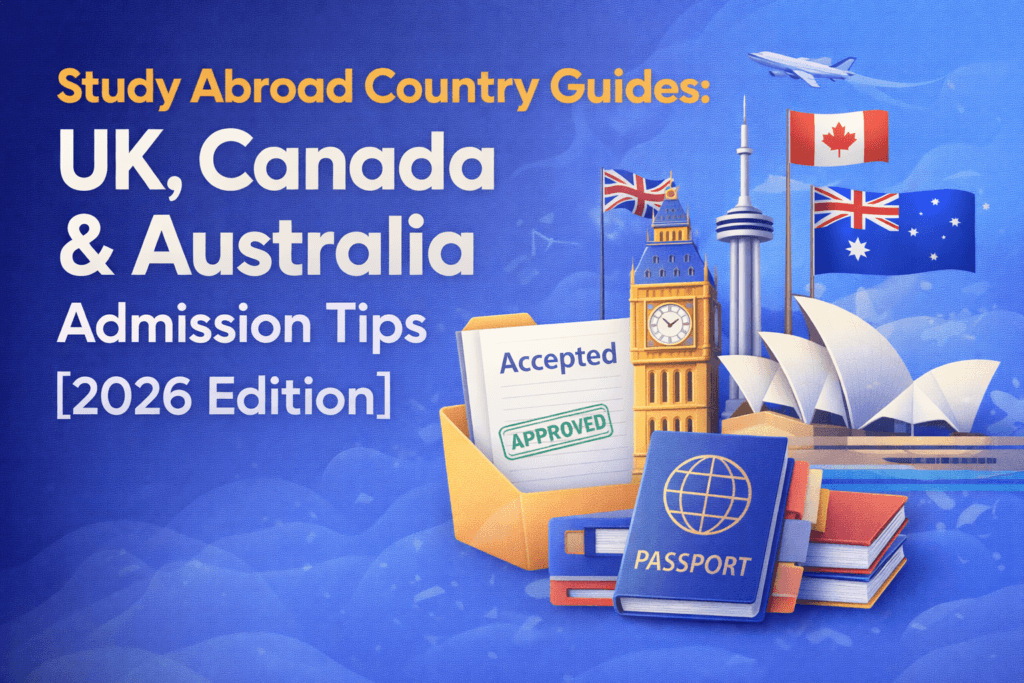
Study Abroad Country Guides: UK, Canada & Australia Admission Tips (2026 Edition)

Study Abroad Country Guides | UK, Canada & Australia Admission Tips 2026 Step-by-step admission tips for studying in the UK, Canada, and Australia. IELTS requirements, university selection, SOP tips, documents, scholarships & visa guidance. Introduction Choosing the right country for studying abroad can be overwhelming. The UK, Canada, and Australia are the top choices for Indian students due to: ✔ High visa approval rates✔ Worldwide recognition of degrees✔ Part-time job opportunities✔ PR/migration pathways✔ Strong post-study work visas This guide gives you country-wise admission tips, updated for 2025, so you can make the right decision. United Kingdom (UK) – Admission Guide for 2026 Why Choose the UK? 2-year Post Study Work Visa (PSW) 1-year Master’s programs World’s best universities (Oxford, UCL, Imperial, etc.) No backlogs limit in most universities Fast admissions (2–4 weeks) IELTS Requirements for UK UG: IELTS 6.0 (no band less than 5.5) PG: IELTS 6.5 (no band less than 6.0)Some universities accept:✔ MOI (Medium of Instruction)✔ Duolingo Admission Tips for the UK Apply Early (3–6 Months Before Intake) Seats fill fast for popular courses like Data Science, Business, Cybersecurity, Nursing. Write a Strong SOP UK universities emphasise: Why this course Why this university Career plan Academic background Relevant projects / internships Use UCAS for Bachelor’s For undergraduate programs → UCAS is the centralized system. Choose Cities with Low Cost of Living Affordable cities: Leeds Liverpool Sheffield Newcastle Avoid London if you’re on a limited budget (₹1.3–1.8 lakh/month). Keep Financial Proof Ready UK requires: 28 days of bank balance Tuition fee + £9,207 (outside London) / £12,006 (London) Documents Required for UK Passport Academic transcripts IELTS/English test SOP LOR (optional for many PG programs) CV Bank statement CAS interview preparation Canada – Admission Guide for 2025 Why Choose Canada? High PR opportunities Affordable tuition vs UK/Australia 20 hours/week part-time work 1–3 year PGWP Safe & multicultural IELTS Requirements for Canada UG/College: IELTS 6.0 (no band <6.0) PG: IELTS 6.5 (no band <6.0) SDS Category (Faster Visa):IELTS 6.0 in all modules + GIC + full-year tuition payment Admission Tips for Canada Apply 8–12 Months Early Canada seats fill extremely fast.For example: Jan intake: Apply by April–July Sept intake: Apply by October–January Late applicants rarely get offers. Choose SDS Route for Higher Visa Success SDS = Simplified + Faster VisaRequirements: IELTS 6.0 each GIC $20,635 Full tuition of 1 year paid Select the Right Province (for PR) Best provinces for jobs + PR: Ontario British Columbia Alberta Manitoba Nova Scotia Prioritize Public Colleges (Higher Visa Rate) Top public colleges: Seneca Georgian Fanshawe Conestoga Humber Niagara Show a Strong SOP for Visa Canada visa officers read SOP carefully.Include: Family background Purpose of study Career path Home ties Financial capacity Documents Required for Canada Passport Academic transcripts IELTS scorecard SOP for college & visa LOR (mainly for universities) Tuition fee payment receipt GIC certificate Medical Financial documents Australia – Admission Guide for 2026 Why Choose Australia? High-paying part-time jobs 2–6 year Post Study Work Visa High visa approval rates Easy PR pathways Flexible intakes (Feb, July, Nov) IELTS Requirements for Australia UG: 6.0 overall (5.5 each) PG: 6.5 overall (6.0 each)Courses like Nursing require higher (7.0 overall). Admission Tips for Australia Choose Popular Courses with Strong Job Demand Top in-demand programs: IT / Cybersecurity Business & Accounting Nursing Social Work Engineering Data Analytics Education Look for Scholarships (Many Available) Australia offers: 20% merit scholarships 50% excellence scholarships Country-based discounts Apply to Regional Universities for PR Points Regional areas give extra immigration points: Adelaide Tasmania Perth Queensland (regional zones) Prepare GTE Statement Properly Australia’s visa success depends heavily on your GTE (Genuine Temporary Entrant) statement. Include: Background Reasons for choosing Australia Financial stability Return plans Keep Proof of Funds Ready Funds for 1 year: Tuition fee Living cost: AUD 24,505 Travel: AUD 2,000 Documents Required for Australia Passport IELTS/TOEFL/PTE SOP (GTE) Academic transcripts CV Financial documents Health insurance (OSHC) Visa documents Which Country Should You Choose? (Quick Guide) Goal Best Country Low fees Canada / UK Fast admission UK Best PR Pathway Canada / Australia Best post-study jobs Australia / Canada 1-year Master’s UK SDS visa advantage Canada Final Tips for All 3 Countries Apply early (avoid last-minute rush) Maintain a clean academic history Improve IELTS score (Band 6.5–7 = more options) Write professional SOP/LOR Show strong financial stability Choose courses aligned with your career Want Country Selection + University Shortlisting? Titan Scholar provides: ✔ Free study abroad counselling✔ SOP/LOR drafting✔ IELTS preparation (₹199 masterclass)✔ University shortlisting (UK/Canada/Australia)✔ Visa filing assistance✔ Scholarship guidance

Education-World

Student Visa Basics: Complete Guide for Studying Abroad (2026 Edition)

Everything Indian students need to know about visas for the UK, Canada, Australia & more Student Visa Basics 2026 | Complete Guide for Study Abroad Learn the fundamentals of student visas — requirements, documents, financial proof, SOP/GTE tips, interview tips & country-wise guidance for 2025. Introduction A student visa is the final and most important step before studying abroad. Many students get confused by requirements, documents, financial rules, and interviews. This guide simplifies everything so you can apply confidently and avoid rejection. Whether you’re applying to UK, Canada, Australia, USA, New Zealand, Germany, or any top destination — the basics remain similar. 1. What Is a Student Visa? A student visa is official permission given by a foreign government that allows you to: ✔ Study full-time✔ Work part-time (depending on the country)✔ Live legally in that country for the duration of your course✔ Apply for post-study work visa Each country has different rules, but the purpose is the same: verify that you are a genuine student with financial ability to study. 2. Basic Requirements for a Student Visa Though country rules differ, almost all student visas need these essentials: Valid Passport Must have at least 6 months validity beyond course duration. Official Offer Letter / CAS / LOA Depending on country: Financial Proof You must show that you can pay: Financial proof includes: English Test Score Most countries require: Medical & Health Insurance Many countries require: Visa Application Form Each country has its own online application portal. Statement of Purpose / GTE One of the most important visa documents. 3. Essential Documents Required Here are the documents almost every student must prepare: ✔ Passport✔ Academic transcripts & certificates✔ IELTS/PTE/TOEFL score✔ Tuition fee payment receipt✔ Bank statements (last 3–6 months)✔ Income tax returns of sponsor✔ GIC certificate (Canada)✔ Scholarship letter (if applicable)✔ SOP/GTE✔ Resume✔ Work experience (if applicable)✔ Medical certificate✔ Biometrics✔ Visa application fee receipt 4. Financial Requirements Explained Why is financial proof important? Visa officers must confirm that: Typical expenses you must show Approximate living costs (per year) 5. Visa Interview Basics (For USA, UK, Some Europe) Some countries require an interview. Here are common questions: Common Visa Interview Questions Tips to Succeed ✔ Be honest✔ Show confidence✔ Do not memorize answers✔ Clearly explain career goals✔ Ensure financial documents are strong✔ Do not confuse the visa officer 6. Understanding SOP/GTE for Visa SOP (Canada, UK, USA) Your SOP should include: GTE (Australia) Very strict and detailed. Must explain: Weak SOP/GTE = high rejection chances. 7. Country-Specific Visa Basics Here’s a short, quick guide: UK Student Visa (Tier 4) Canada Study Permit Australia Student Visa (Subclass 500) USA F1 Visa Germany Student Visa 8. Visa Processing Timelines (2025) Country Processing Time UK 2–4 weeks Canada (SDS) 3–6 weeks Australia 1–2 months USA 2–4 weeks Germany 2–4 months Tip: Apply at least 3–5 months before intake. 9. Common Visa Rejection Reasons Avoid these mistakes: ❌ Weak financial proof❌ Inconsistent academic history❌ Weak SOP/GTE❌ Unclear study plans❌ Fake documents❌ Poor interview performance❌ Gap years without explanation 10. Tips to Boost Visa Approval Chances ✔ Maintain strong academic profile✔ Improve IELTS score (6.5+ recommended)✔ Prepare a solid SOP/GTE✔ Show clear ties to home country✔ Keep financial statements clean✔ Choose a relevant course✔ Apply early Conclusion Understanding visa basics early helps you avoid mistakes and increases your chances of approval. With the right documents, financial planning, and a clear study plan, you can confidently apply and start your international education journey. Titan Scholar helps students with: ✔ Visa documentation✔ SOP/GTE drafting✔ IELTS preparation✔ University selection✔ Step-by-step application support

Titan Scholar is a premium IELTS coaching platform helping students achieve high scores through expert-led live classes, proven strategies, and practical exam-focused training.

About Titan Scholar

Contact Us

Follow Us

Newsletter

You have been successfully Subscribed! Ops! Something went wrong, please try again.